MEDIA CENTER Media Center
CHUNGDO MUSHROOM
MEDIA CENTER
Media Center
PROMOTION & BROCHURE
Official brand films and the product catalogue
of Cheongdo Mushroom Farm, all in one place.
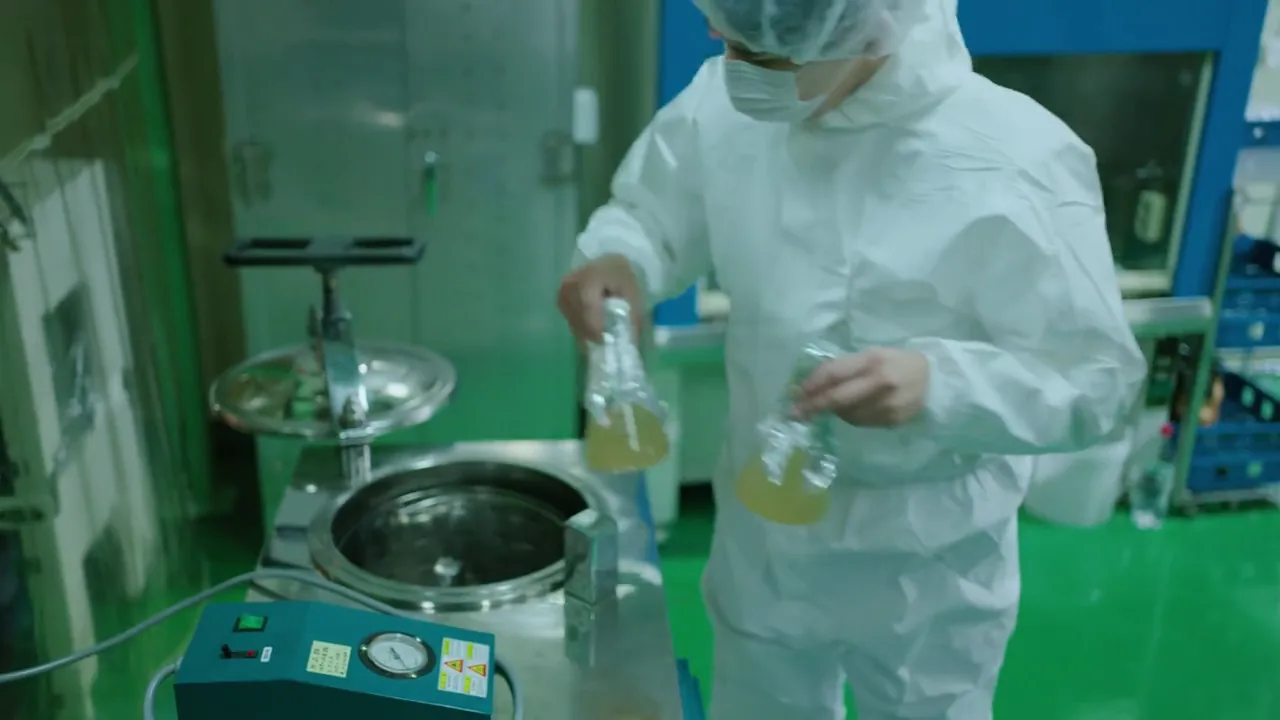 VIDEO
 VIDEO


CHAPTER 01 / 06
Sweat in the Middle East
grew Green Peace

Park Hee-joo, a young man who loved to draw, went on to an arts high school. Yet he did not want to live in poverty in the countryside, clinging to traditional farming. To raise the funds to open a new path in agriculture, he headed to construction sites in the Middle East, working as a labourer for five years. With that solid foundation he returned home to Cheongdo and founded an oyster and reishi mushroom farm, beginning his lifelong bond with mushrooms.
Traditional mushroom growing demanded enormous labour. When the economic boom of the early 1980s deepened the labour shortage, he concluded that "without mechanisation, farming cannot survive" and made a bold switch of crops. In March 1994, carrying the value of fresh, safe, eco-friendly food, he founded Green Peace Farm No.1 and took the first step as a corporate farm.
CHAPTER 02 / 06
Innovation that turned crisis into opportunity,
opening the door to world markets

While the business was thriving at home, the 1998 Asian financial crisis (IMF) struck. Raw material prices soared and domestic demand collapsed, putting the company's survival at stake. Instead of staying in the home market, CEO Park Hee-joo chose to confront the crisis by knocking on the door of the demanding US market. He founded the export company Green Partnership Company, brought in trade specialists and staked everything on overseas markets.
At first the journey was hard: enoki was unfamiliar to Americans, and the team gave it away almost for free to introduce it. Building step by step from Korean communities, in 2001, three years after entering exports, the farm won final approval from a major US supermarket and loaded export mushrooms onto aircraft. Success in the US led straight to Canada and announced the farm's arrival on the global stage.
CHAPTER 03 / 06
The grit of 40 tonnes of free mushrooms,
winning over European tastes

Confident after opening the Americas, CEO Park Hee-joo turned to Europe. But no one recognised Korean enoki, and when the mushrooms piled up in the warehouse at risk of spoiling, he boldly gave the entire stock away for free. He handed out mushrooms to Korean restaurants and locals and developed local recipes such as mushroom salad, steadily winning over Western palates.
This persistent push to build a taste for enoki finally led to a surge of orders from local restaurants and buyers. To move beyond relying on buyers alone, in June 2008 he founded a sales and distribution joint venture in the Netherlands (Green Mushroom Farm B.V.) to market directly, and it became an unrivalled base for supplying Korean mushrooms reliably across Europe.
CHAPTER 04 / 06
Two uncompromising principles,
becoming a global standard
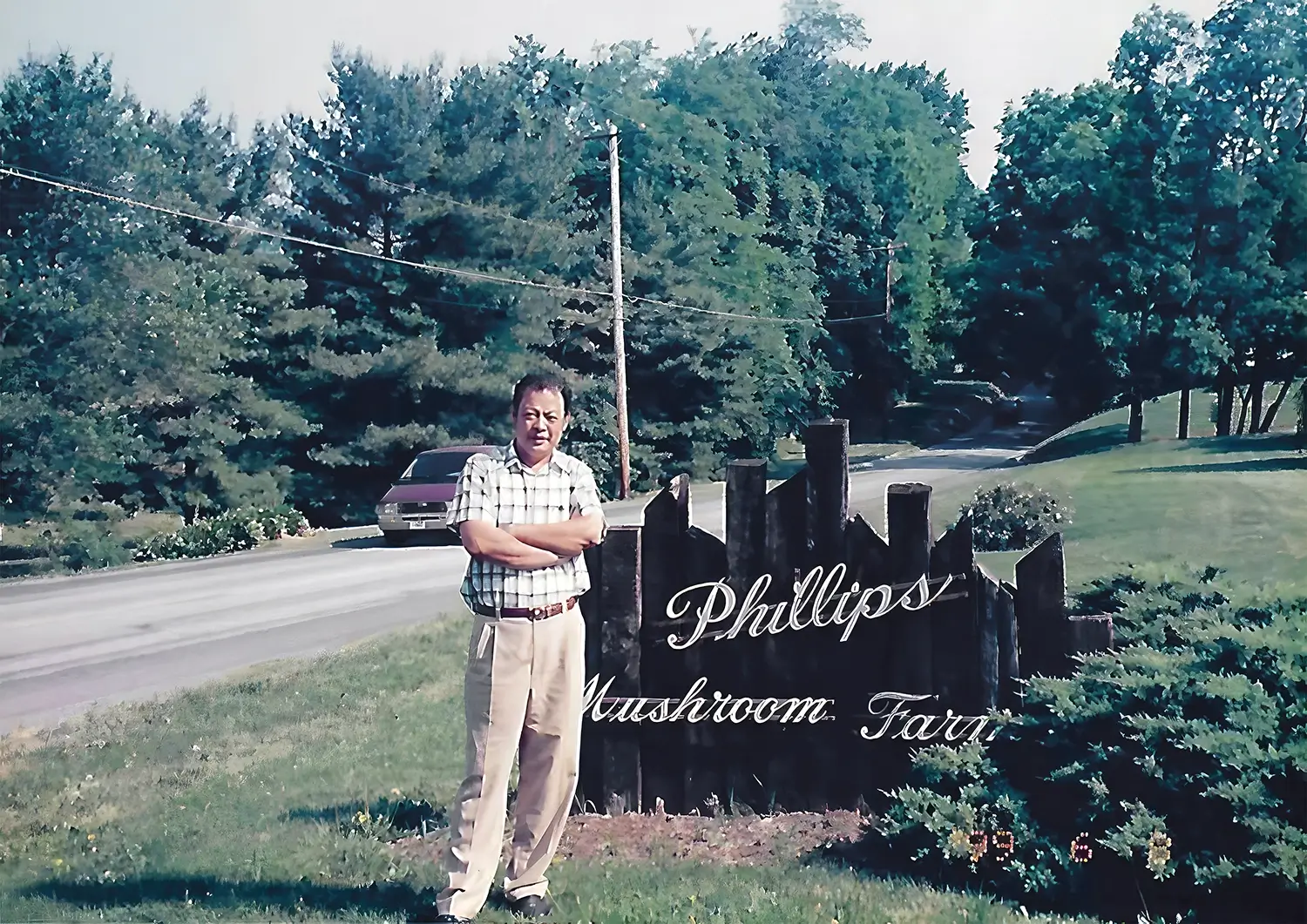
What has kept Green Peace Farm Korea's largest mushroom farm for nearly half a century is two principles it never compromises. Creating an honest environment that follows nature so mushrooms grow at their healthiest, and rigorous quality control that ships only mushrooms passing strict standards for consumers' health, are the core values at the heart of Green Peace Farm.
In 1998 the farm set up its own laboratory staffed by master's and doctoral microbiologists, and in 1999 it created a machinery division that builds its own equipment, raising factory automation above 80%. On this precision production system it earned ISO 9001, GLOBAL GAP and HACCP certifications in succession, fully meeting the demanding food safety standards of the US and Europe.
CHAPTER 05 / 06
Born in the blessed nature of Cheongdo,
K-Mushroom reaches the world

Cheongdo, Gyeongsangbuk-do, is the birthplace of the Saemaul Movement that led Korea's golden age of economic growth. Home to that spirit of diligence, Cheongdo is a basin ringed by mountains, where wide daily temperature swings firm the tissue of crops and concentrate their nutrients. Its ecological isolation keeps outside diseases away, and its clean waters let healthy mushrooms grow without chemical control.
Green Peace Farm runs a network of 11 farms in Korea and is a government-designated specialised production and export complex responsible for over 40% of Korea's enoki output. With precise production planned two months ahead and a cold chain that holds temperature from harvest to delivery, it has exported fresh K-Food to the Americas, Europe and Oceania for the past ten years without a single delay.
CHAPTER 06 / 06
A legend of annual sales in the tens of billions of won,
drawing the future of Korean agriculture
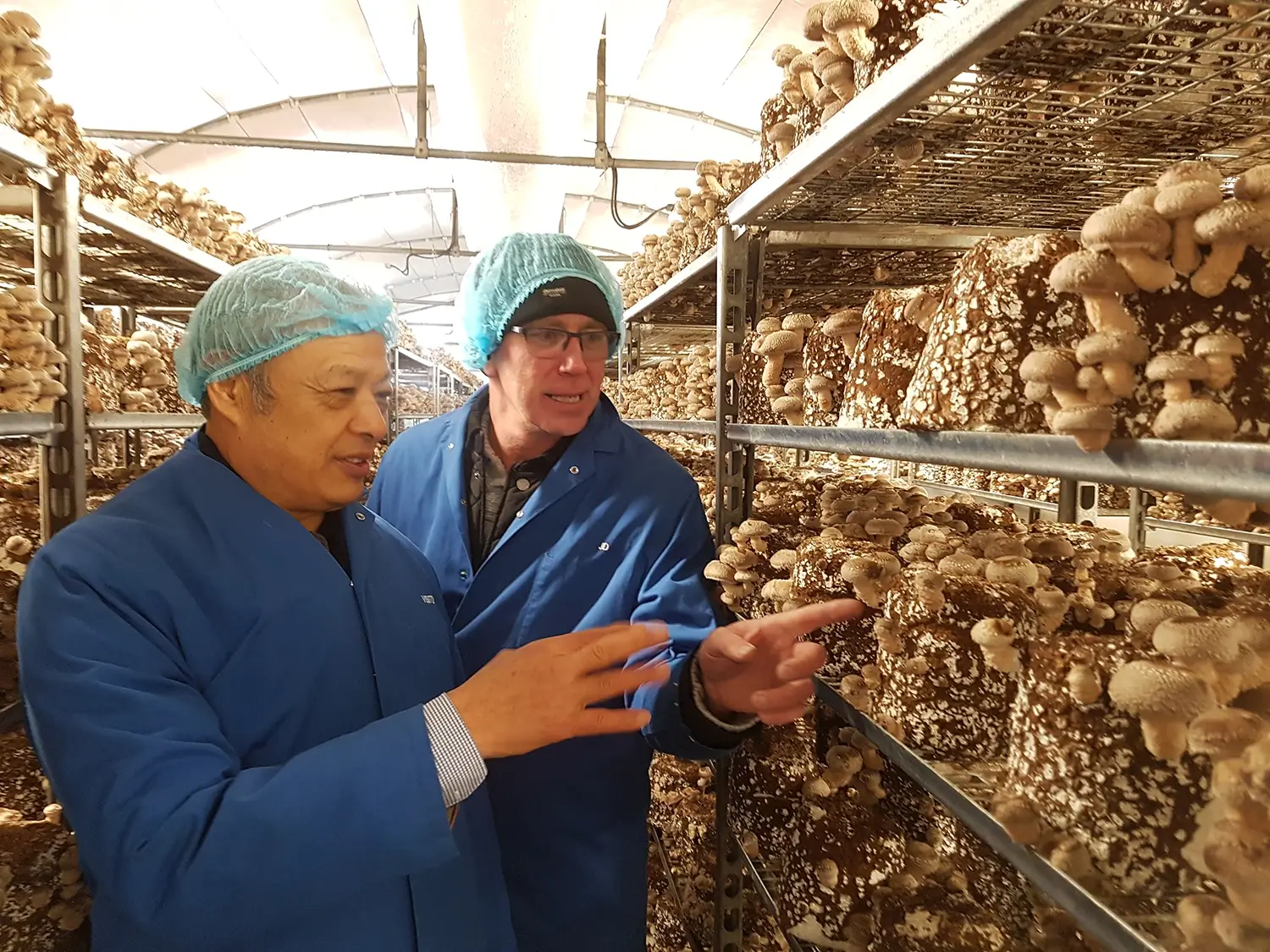
Starting with the distribution company in the Netherlands, the farm built an unrivalled global network: joint farms in Shanghai and Fushun, China; the king oyster specialist joint farm Mushroom Park GmbH in Germany; and acquisitions and joint ventures with Bulla Mushrooms in Australia and Smithy Mushrooms in the UK. The UK farm supplies every store of major retailers such as TESCO and M&S, setting the standard in global markets.
Although the company has grown into a global business exporting tens of millions of dollars of enoki, king oyster and beech mushrooms to more than 20 countries, CEO Park Hee-joo still prefers to call himself a farmer. Convinced that "farming can stand tall on the world stage when it is competitive," his journey proves to every Korean farmer today the great hope that "you can live well by farming."
Need more material?
For further material or a tailored proposal, please contact us any time.